
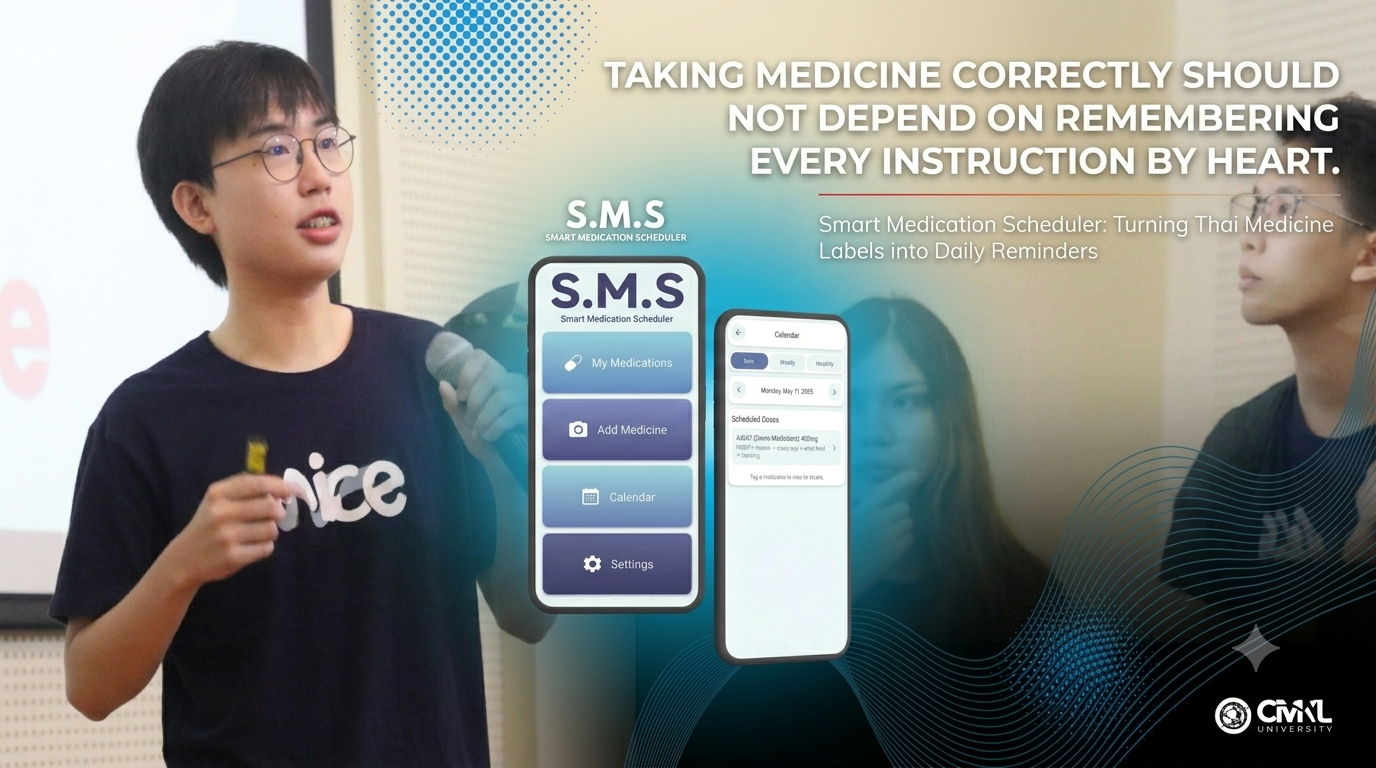
Smart Medication Scheduler: A Thai-First Medication Reminder Built from Real Label Scans
Medication instructions can be difficult to manage, especially when patients receive multiple medicines, unclear labels, or dosage schedules that are easy to forget. For many users, the challenge is not only remembering when to take medicine, but also understanding how written instructions should become a daily routine.
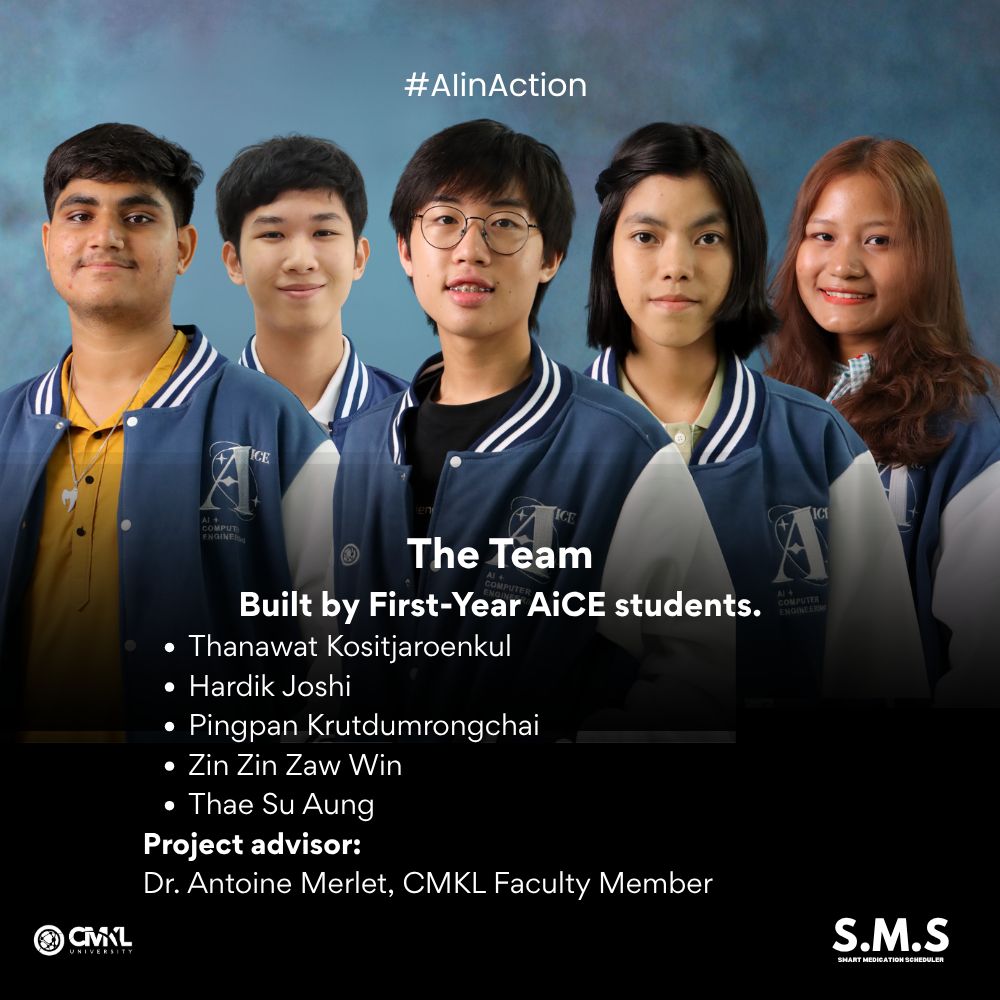
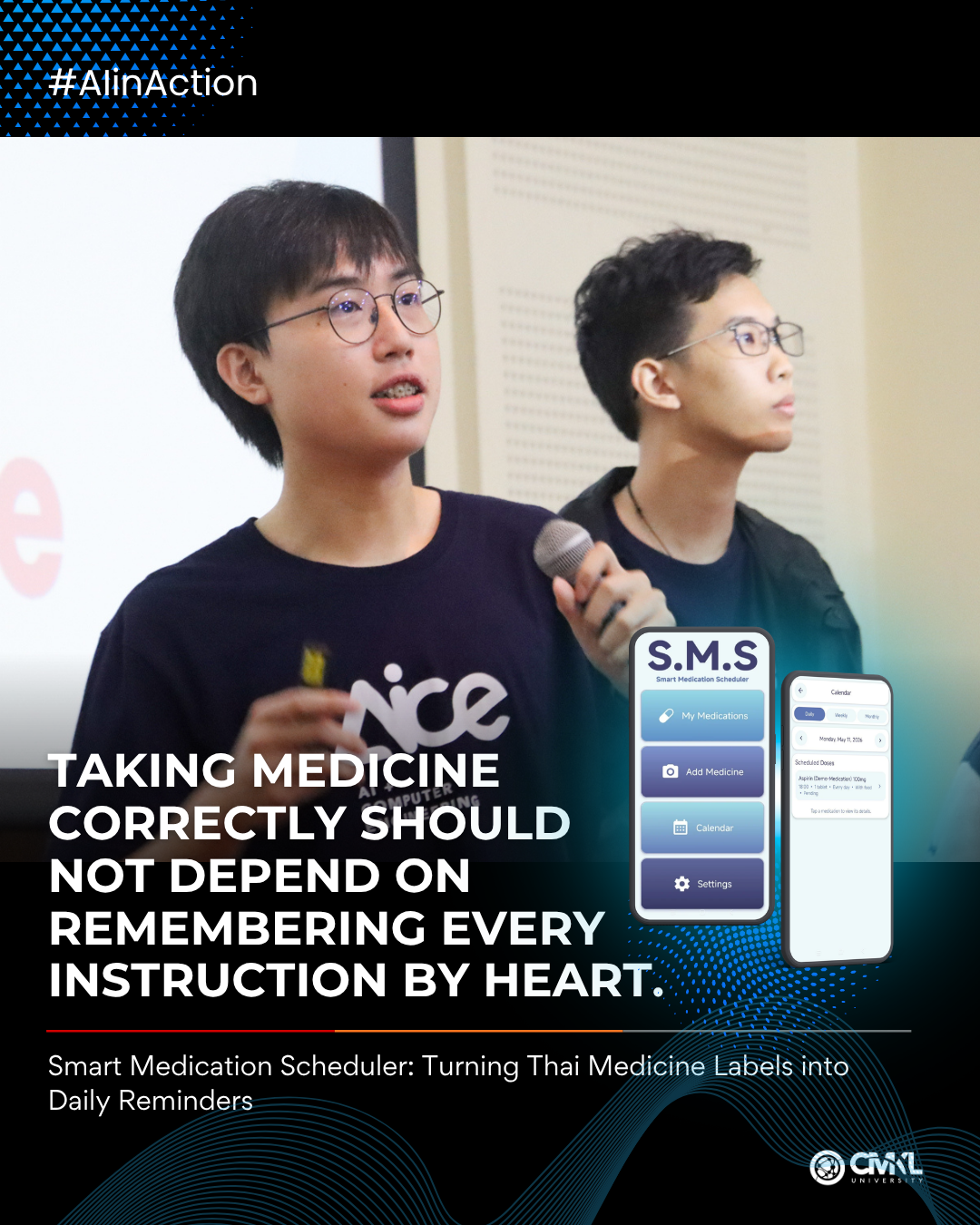
Smart Medication Scheduler, or S.M.S., was developed by CMKL students Thanawat Kositjaroenkul, Hardik Joshi, Pingpan Krutdumrongchai, Zin Zin Zaw Win, and Thae Su Aung under the guidance of Dr. Antoine Merlet. The project focuses on a practical healthcare challenge in Thailand: helping users scan Thai medication labels and turn them into structured reminders.
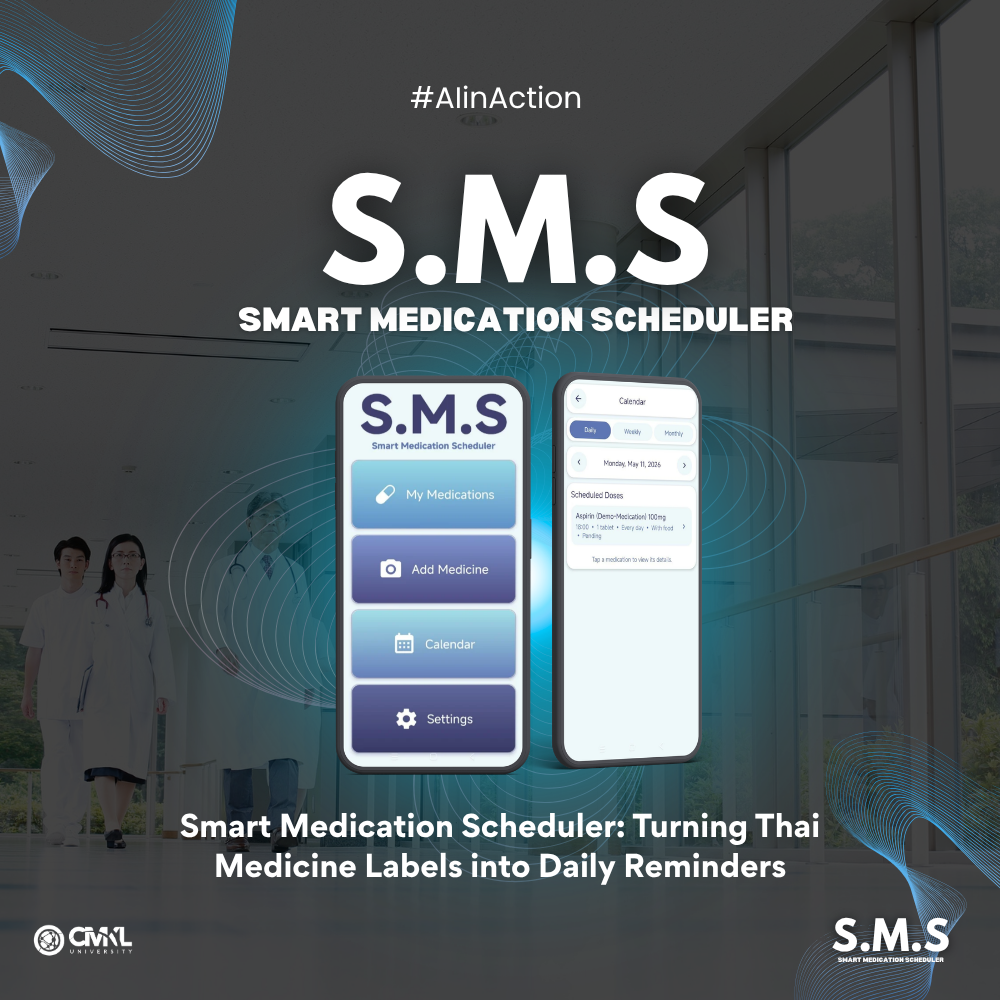
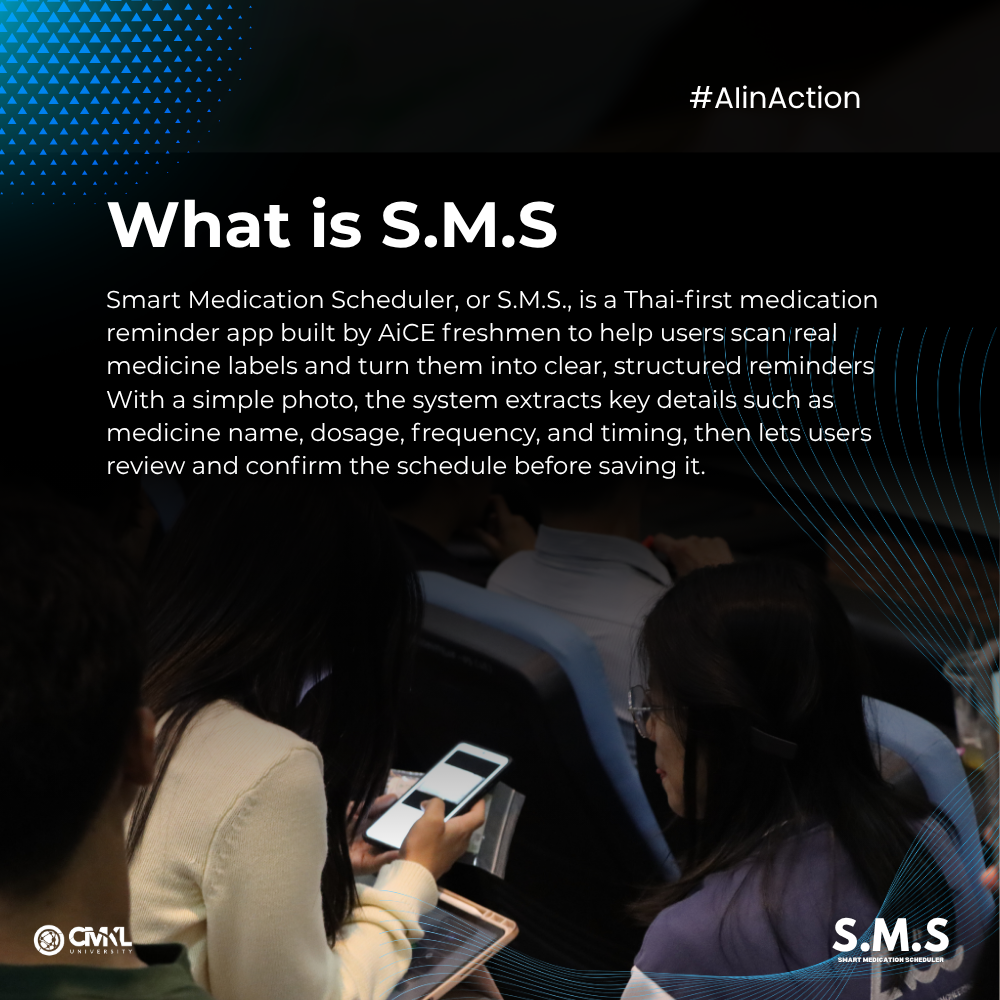
The team built a mobile application that allows users to take a photo of a medication label. The system extracts important information such as medicine name, dosage, frequency, and timing, then helps the user create reminders. Rather than requiring users to manually enter every detail, the app uses AI to assist with information extraction while still keeping the user in control through confirmation steps.
The technical workflow combines optical character recognition, Thai-language processing, and large language model-assisted extraction. Medication labels are often short, inconsistent, and formatted differently across clinics or pharmacies, which makes the task more difficult than standard text recognition. The team also considered privacy by designing redaction and confirmation workflows before reminder data is saved.
A major strength of the project is its local relevance. Many health applications are designed around English-language labels or standardized medical systems. S.M.S. begins from the Thai user context, where medication labels may include Thai instructions, abbreviated dosage patterns, and varied formatting. This makes the project a strong example of AI that must adapt to real language and real user behavior.
The project also highlights an important lesson in healthcare AI: automation must be paired with verification. The system can assist users by extracting and structuring information, but the user must still confirm the reminder schedule before relying on it.
S.M.S. demonstrates how CMKL students can apply computer vision, natural language processing, mobile development, and responsible design to everyday health management. It is a student-built system with a clear public-health use case and practical value for Thai users.
Project Members: Thanawat Kositjaroenkul, Hardik Joshi, Pingpan Krutdumrongchai, Zin Zin Zaw Win, Thae Su Aung
Advisor: Dr. Antoine Merlet, CMKL Faculty Member
Domain: Healthcare AI, OCR, Thai NLP, Mobile Application, Medication Management


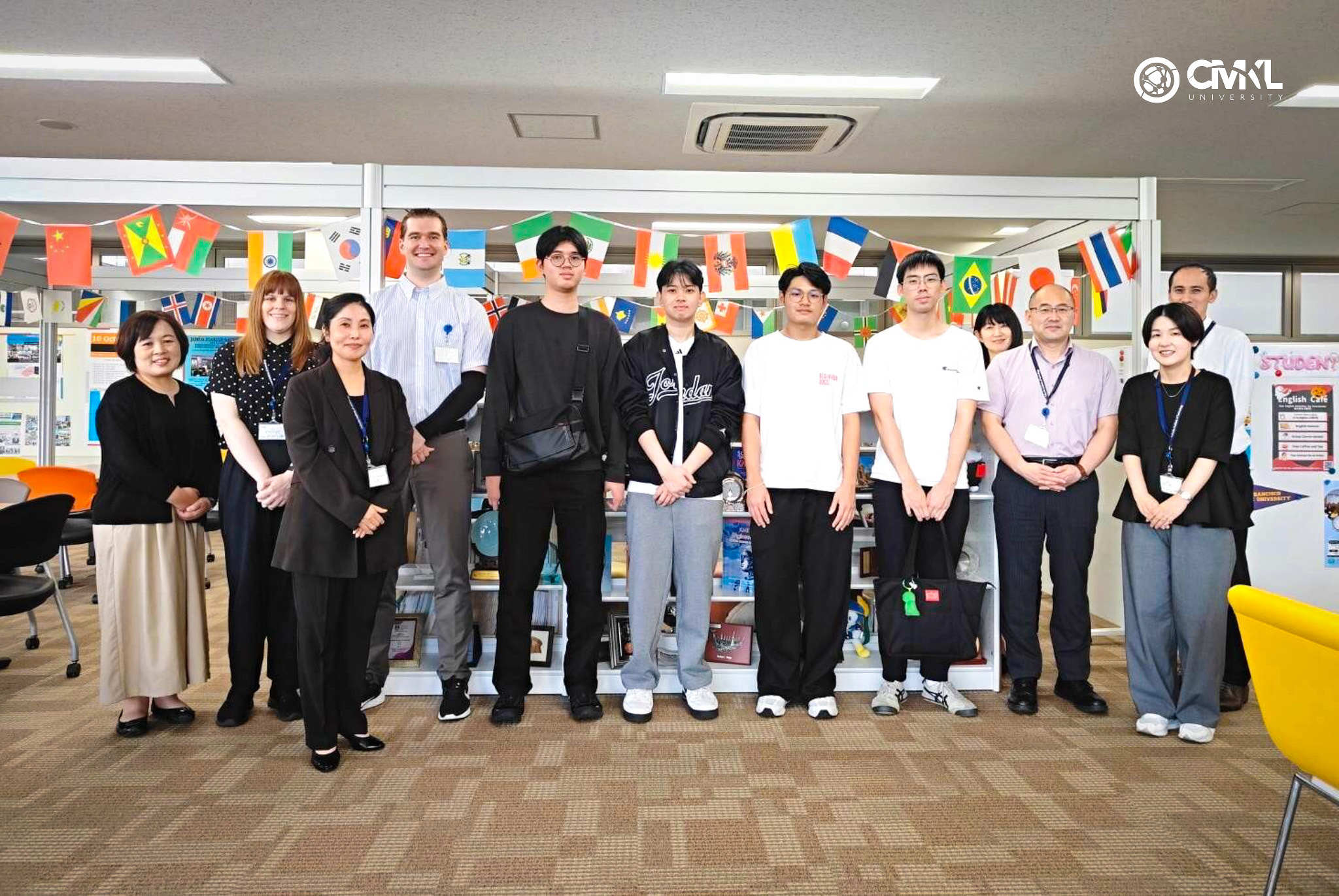
Four Artificial Intelligence and Computer Engineering students will spend nearly three months at Fukuoka Institute of Technology, expanding their research experience through CMKL’s academic collaboration in Japan.
Read more
CMKL University hosted the online AI Innovator Award 2026 Competition Orientation, welcoming young innovators from Thailand, the Philippines, the United Kingdom, the United States, and beyond as they begin their competition journey.
Read more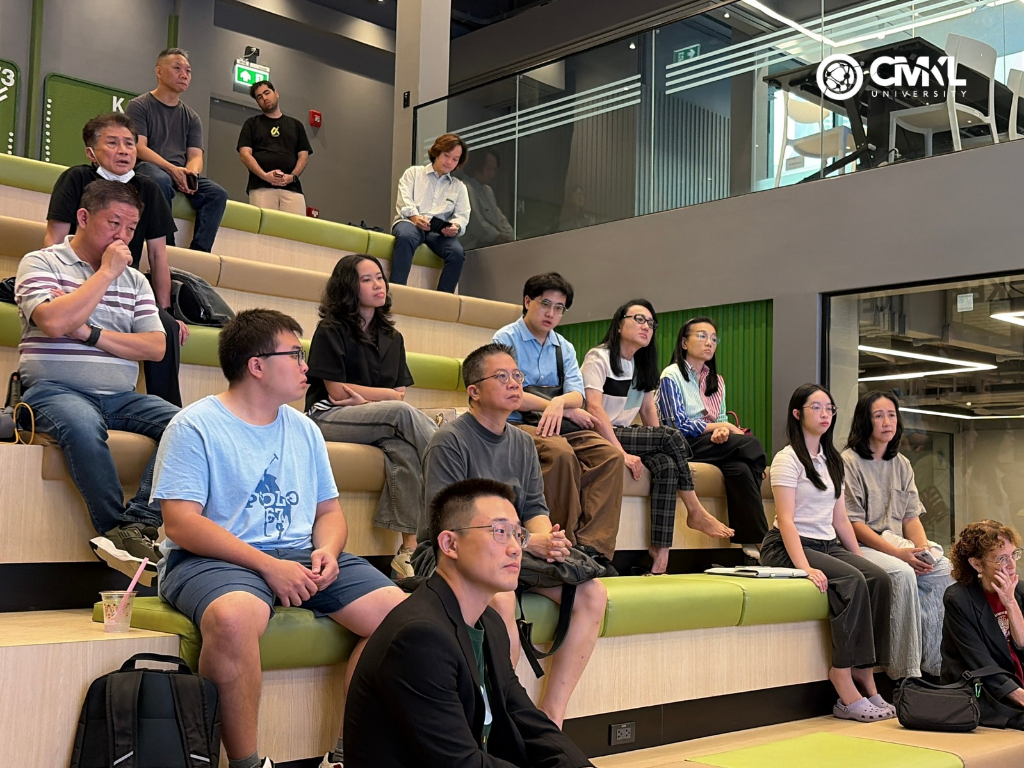
New monthly series brings CMKL faculty and the public together to examine how artificial intelligence can move from promising technology to responsible, practical adoption.
Read more